Erratic supply of piped water to consumers is forcing people in some parts of the country to turn to unsafe sources to draw water for household chores.
The Nation checks in Blantyre, Chikwawa, Lilongwe, Salima, Dowa, Mzuzu and Rumphi established that intermittent water supply and dry taps have compelled households to seek alternative sources for washing, bathing and cleaning their homes. The sources include rivers, shallow wells and irrigation canals.
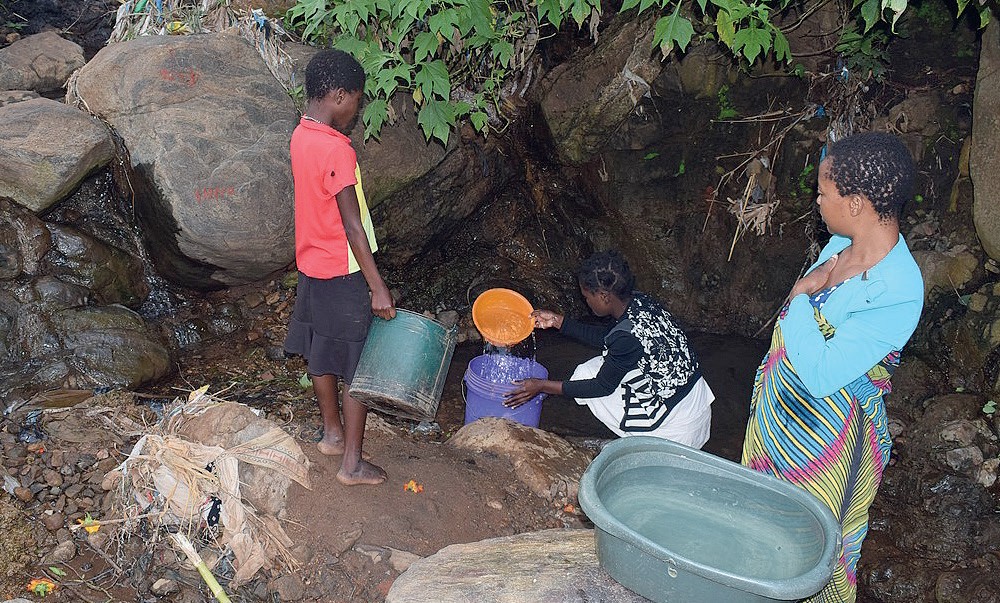
In Ndirande Township, Blantyre, residents Esther Pangani and Jacqueline Chibwana said unreliable water supply forced them to depend on Nasolo River for laundry, bathing and other household chores.
“Water has now become expensive because for drinking and cooking we rely on bottled water due to dry taps. For other household chores we have Nasolo River here [in Ndirande] where we fetch water. But the challenge is that not every resident can afford to buy bottled water,” said Chibwana.
In Nchalo, Chikwawa, Alice Matemba said her locality has almost turned into a desert, with households experiencing low pressure and sometimes dry taps since March this year and have resorted to drawing water from canals.
The Nation established a similar pattern in some parts of Lilongwe City, particularly Kawale, Chilinde and Areas 22, 23, 24 and 25.
Marriam Issah of Chilinde Township said water shortages, which started around April this year, have worsened, forcing households to rely on shallow wells.
In Mzuzu City, Area 4 Kaziwale is the worst hit as is Rumphi Boma.
Area 4 Kaziwale resident Raphael Chammagomo said tap water was no longer reliable, forcing many households to use shallow wells.
Northern Region Water Board (NRWB) public relations manager Edward Nyirenda acknowledged water supply challenges in some parts of the region.
He said while production capacity was adequate, limitations in the distribution system, particularly pumps and pipelines serving Mzuzu North, affected delivery.
Nyirenda identified Rumphi, Chilumba in Karonga and Chintheche in Nkhata Bay as other schemes where production and supply capacity fell below demand, attributing the challenges to growing demand, inadequate distribution infrastructure and electricity supply problems.
Blantyre Water Board spokesperson Evelyn Khonje and Southern Region Water Board spokesperson Rita Makwangwala were yet to respond to questionnaires by press time at 9pm.
On the other hand, Lilongwe Water Board (LWB), in a September 29 2026 notice, acknowledged that it was producing 125 million litres against a daily demand of 157 million litres, leaving a shortfall of 32 million litres.
The board said the deficit was causing intermittent supply and reduced water pressure in some areas.
LWB has since advised customers to conserve water and report prolonged supply interruptions.
Water supply expert John Njalammano attributed the recurring water shortages to inadequate investment in water infrastructure despite population growth and economic expansion.
He said ageing equipment was under increasing pressure to meet rising demand, with shortages becoming more pronounced during hot weather when water consumption increases.
Njalammano warned that continued interruptions could expose people to unsafe water sources and increase the risk of waterborne diseases.
“Unreliable water supply also affected economic productivity because some factories cannot operate without water, while residents lose productive time searching for it,” he said.
The Malawi Government Annual Economic Report for 2025 indicated that the country’s five water boards were losing billions of kwacha in potential revenue through non-revenue water (NRW)—water pumped and processed for consumption, but lost through pipe leakages in transit—which averaged 35.3 percent in 2024.
BWB recorded the highest NRW at 50 percent followed by LWB at 35.8 percent, NRWB at 33 percent, SRWB at 30.9 percent while Central Region Water Board was the least at 27 percent.